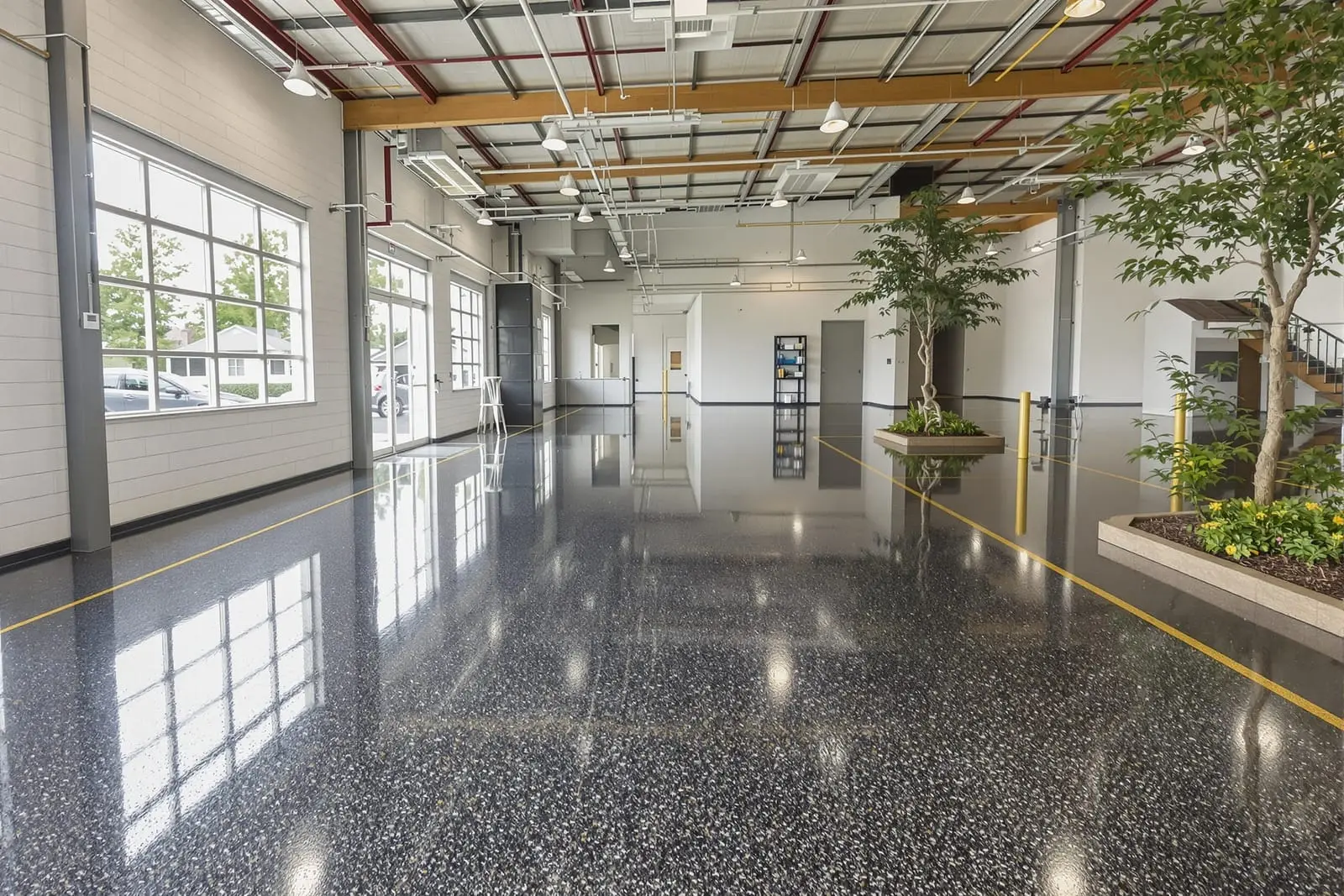
We install industrial concrete floors in Madison, WI for warehouses, plants, and distribution centers. Our slabs are engineered for forklifts, racking, and heavy machinery with proper thickness, reinforcement, and flatness. Upgrade to durable warehouse concrete flooring that supports productivity and reduces maintenance issues.
Primetime Concrete Madison provides professional industrial concrete floors throughout Madison, WI and the surrounding area. Our licensed, insured crew delivers safe, clean, on-time work with a free estimate before anything begins. Call (608) 292-5067 or request your free quote.
Industrial Concrete Floors Built for Madison Warehouses
Industrial concrete floors in a real warehouse or plant are very different from a house garage slab. At Primetime Concrete Madison, we design and pour floors that match how your building is actually used: pallet jacks, forklifts, racking layouts, wash-down areas, or production lines.
When we visit your Madison or Dane County facility, we start by looking at load paths rather than square footage alone. We ask where the heaviest racks will sit, where forklifts turn the most, where dock plates land, and whether you plan to add machinery later. Those answers affect slab thickness, joint layout, and reinforcement. A light manufacturing shop on Madison’s east side might get a 5 inch slab with fiber and saw-cut joints. A high-bay warehouse in DeForest with very narrow aisle racking might need 6 inch or thicker floor, doweled joints, and tighter flatness tolerances.
We also factor in local soil and moisture conditions. Many industrial sites around Madison are on fill or silty soils from older redevelopment. That means more attention to base preparation, compaction, and vapor barriers so your floor does not settle, curl, or transmit moisture into stored product or equipment. Our goal is not just to pour concrete, but to give you a floor that handles your traffic and Wisconsin’s climate for decades with reasonable maintenance.
How We Install Warehouse & Industrial Concrete Floors
A durable industrial floor starts long before the truck shows up with concrete. On most warehouse projects, Primetime Concrete Madison follows a step-by-step process that keeps your schedule and long-term performance in mind.
First, we evaluate and prep the subgrade. We proof-roll the base with equipment to find soft spots, then fix those before they turn into slab cracks. We typically install a compacted crushed stone base, often 4 to 8 inches thick depending on soil and load requirements. In areas prone to moisture, like older Madison industrial parks with higher groundwater, we use a vapor barrier under the slab to reduce moisture migration into floor coatings or stored goods.
Next, we set forms and establish elevations. For large open warehouses, we use laser levels to maintain slab thickness and flatness. If you need specific flatness for high-rack or narrow-aisle forklifts, we adjust our placement techniques and finishing methods to hit those numbers.
Reinforcement is then placed. Depending on the design, this may be welded wire mesh, rebar, post-tensioning (on some specialized projects), or high-performance synthetic fibers blended into the mix. On busy forklift routes and at dock doors, we often install doweled joints and extra reinforcement to prevent spalling at slab edges.
Concrete placement is planned in pours or sections that match your building and schedule. We coordinate truck timing, pump or chute placement, and crew size so the slab can be placed and finished consistently. As soon as the concrete is ready, we start machine troweling. For many warehouses we provide a hard-troweled finish, sometimes with a dry shake hardener in high-wear zones. Finally, we cut joints on a tight schedule, usually within 6 to 24 hours, to control where cracks form instead of letting them run randomly across your floor.
Floor Design Options for Different Industrial Uses
Not every industrial concrete floor in Madison needs the same level of finish or reinforcement. Primetime Concrete Madison helps you pick what makes sense for your operation instead of selling the most expensive option by default.
For heavy racking and constant forklift traffic, we often recommend a thicker slab with dowel baskets at control joints and possibly a surface hardener. This reduces joint breakdown and rutting in the wheel paths. In operations with frequent wash-down or food handling, we focus on proper slope to drains, denser finishing to limit absorption, and compatibility with epoxy or urethane coatings your coating contractor may install later.
If you run light assembly, packaging, or storage, you may not need the same level of reinforcement or ultra-flat tolerances. In these cases, a fiber-reinforced slab with well planned joints can be more cost-effective without sacrificing performance. We can also tailor the finish: slightly textured for better traction in loading zones or tighter trowel in areas where small parts might be dropped and need to be found easily.
We also work on floors in existing facilities that need selective replacement or thickening. For example, adding a heavier machine line along one wall or converting part of a warehouse into a production area. In those situations, we cut out sections of slab, check what is underneath, and design a replacement panel tied into the surrounding floor with dowels so you avoid differential movement and trip hazards.
What Drives Cost and Schedule for Industrial Floors
Many facility managers in Madison want to know why two industrial floor quotes can look so different. The cost is usually driven by four main factors: slab thickness, reinforcement, finishing requirements, and site conditions.
Thicker slabs and heavier reinforcement obviously cost more in materials and labor, but skipping them where they are needed can lead to curling, settlement, and constant patching. Our estimates from Primetime Concrete Madison explain where the thickness or steel is going and why, such as under future racking rows or at dock doors.
Finishing level matters too. A basic trowel finish for general storage is less labor-intensive than a very flat, very smooth floor for high-bay racking or sensitive equipment. If your racking supplier or engineer has specific flatness goals, share those with us early so we can price and plan crews correctly.
Site conditions around Madison also play a role. If your building pad has poor access, limited staging area, or tight working hours, we may need more smaller pours instead of fewer large ones. That affects both schedule and labor. Cold-weather work, which is common from late fall through early spring, may require heated enclosures, concrete blankets, or modified mix designs with accelerators so the slab gains strength in time. We spell these items out so you understand what is truly necessary for a durable result, not just temporary shortcuts to lower the bid price.
Common Problems in Industrial Floors and How We Prevent Them
When we get calls to repair industrial concrete floors around Madison, the same issues show up: random cracking, joint spalling where forklifts cross, low spots that hold water, and coating failures from moisture. Primetime Concrete Madison uses lessons from those repairs to build new floors that avoid the same problems.
To limit uncontrolled cracking, we plan joint spacing and locations around your column grid, doors, and equipment. We also pay attention to curing. A good curing compound or wet curing regime helps reduce shrinkage and curling. On projects where joints are a constant maintenance headache, we may recommend fewer but heavier duty joints with dowels, along with better load transfer details.
Joint and surface damage typically follows traffic paths. That is why we reinforce dock approaches, interior truck lanes, and turn areas more carefully. We might suggest joint fillers suited for forklift traffic so edges are protected instead of crumbling. For moisture and coating issues, especially in older industrial areas near the Yahara River or low-lying sites, we use vapor barriers, proper base preparation, and sometimes mix adjustments to limit moisture that can push up into epoxy or polished surfaces.
If you already have an operating warehouse, we also help with phasing so you can keep product moving. That can mean pouring in lanes, overnight or off-shift work, and temporary ramps between new and old slab sections. A little planning here keeps your team safe and your operations running while the floor upgrades are completed.
“
Professional warehouse & industrial concrete floors, done right the first time, quality materials, honest pricing, and results that last.
Primetime Concrete Madison
Warehouse & Industrial Concrete Floors Across Our Service Area