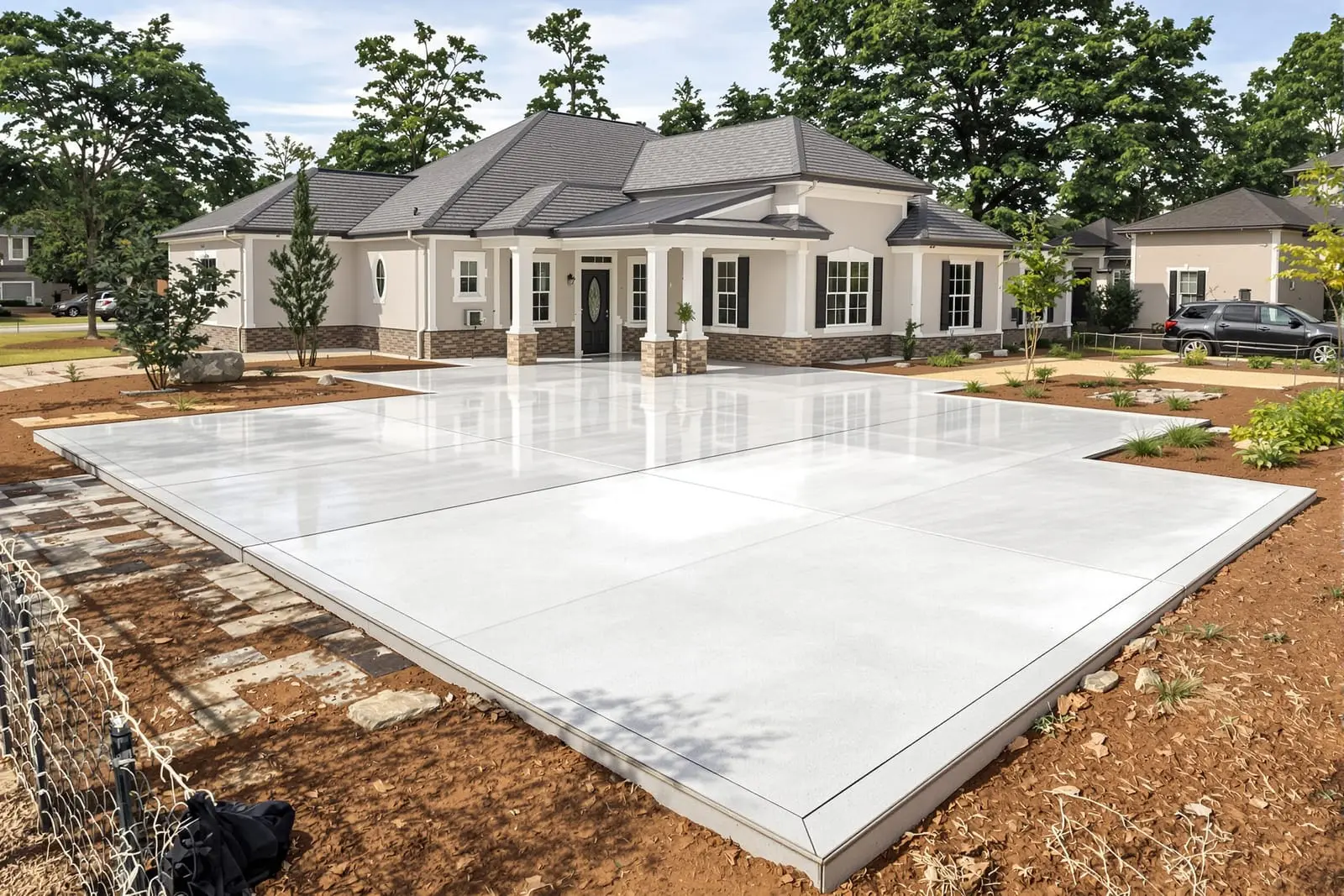
We handle structural concrete in Madison, WI for commercial sitework including foundations, grade beams, piers, and equipment pads. Working from engineered plans, we place reinforcement and pour concrete with attention to alignment, elevation, and strength requirements. Our team coordinates with other trades to keep projects moving. Partner with a concrete contractor experienced in structural work.
Primetime Concrete Madison provides professional structural concrete throughout Madison, WI and the surrounding area. Our licensed, insured crew delivers safe, clean, on-time work with a free estimate before anything begins. Call (608) 292-5067 or request your free quote.
Sitework & Structural Concrete for Madison Properties
Sitework and structural concrete are the foundation of every reliable building, parking area, and outdoor space. At Primetime Concrete Madison, we focus on the parts you usually never see again after backfilling and framing, but that carry all the weight and handle every freeze-thaw cycle in Madison.
For homeowners, this can mean new house foundations, garage slabs, retaining walls, and structural patios. For commercial and municipal clients, it often includes footings for steel columns, thickened-edge slabs, equipment pads, loading docks, dumpster pads, and stair foundations. We also handle the sitework that comes before the concrete, such as grading, base preparation, and drainage details.
Our crew is familiar with local codes, engineering requirements, and Madison soil conditions. We coordinate with your architect or structural engineer when needed, or we can work from a simple plan set for smaller residential projects. The goal is always the same: structural concrete that stays stable and safe through our winters, spring thaws, and heavy summer rains.
Planning and Evaluation of Your Site
Every sitework and structural concrete project starts with a detailed look at the property. At Primetime Concrete Madison, we begin by walking the site with you, reviewing access for trucks and equipment, and checking slopes, existing structures, and nearby utilities.
In many parts of Madison and the surrounding Dane County area, soil conditions vary within the same block. We look for soft spots, organic soil, or areas that have been previously filled. If there is any doubt, we may recommend bringing in an engineer or having a compaction test done so that your foundation or slab is not built on questionable ground.
Drainage is another key part of planning. We evaluate how stormwater will move across the site and around the new concrete. On sloped lots or tighter in-city lots near Regent, Atwood, or the East Side, we may need to incorporate swales, drain tile, or strategic grading so water does not push against foundation walls or pool under slabs. Proper planning at this stage helps prevent cracking, frost heave, and water problems years down the line.
We also consider logistics: where to store materials, where concrete trucks can reach, and how to avoid damaging landscaping or neighboring properties. For many residential projects we schedule work to minimize disruption to your driveway or street parking, coordinating with you on timing for inspections and any needed street permits from the City of Madison.
Excavation, Base, and Drainage Preparation
Good structural concrete starts below the concrete. Our team handles excavation for footings, foundations, and structural slabs, working to the depths and dimensions specified on your plans or as required by code. In Madison, this often means going below frost depth, which is commonly 48 inches or more, so that footings do not move with freeze-thaw cycles.
Once the area is excavated, we focus on the subgrade and base. We remove soft or organic material and place a compacted granular base, typically crushed stone or gravel. This layer is compacted in lifts using plate compactors or rollers, and we pay close attention around footing trenches and slab edges where poor compaction most often shows up as settling later.
For foundation walls and many structural slabs, we install drain tile and a drainage layer where needed. Perimeter drain tile, filter fabric, and connection to a sump or daylight outlet help relieve hydrostatic pressure that would otherwise push water against your concrete. This is especially important in neighborhoods with higher water tables or heavier clay soils, where basements can be vulnerable to seepage.
Vapor barriers or underslab insulation might also be installed under interior structural slabs, particularly in finished basements or commercial spaces where moisture control and energy efficiency matter. We discuss these options with you in advance so you understand the benefits and costs before we proceed.
Formwork, Reinforcement, and Structural Details
Once the site is prepared, we build the forms and install reinforcement that give your structural concrete its shape and strength. Primetime Concrete Madison uses formwork systems suited to the specific project: wood forms for many residential footings and walls, and engineered form panels for larger or more complex commercial work.
Within the forms we place reinforcing steel according to the plans or standard practices for the type of structure. This may include continuous footing bars, vertical and horizontal rebar in walls, and rebar grids or welded wire mesh in slabs. In areas subject to higher loads, such as garage door openings, stair landings, or column pads, we often use additional bars, thicker rebar sizes, or closer spacing.
We pay attention to concrete cover requirements so that steel is fully embedded and protected from moisture and road salts, which is especially important in Madison where winter deicing materials can increase corrosion risk over time. Chairs and spacers keep the rebar at the correct height, and we secure all reinforcement to reduce movement during the pour.
If your project includes anchor bolts, embedded plates, column bases, or mechanical penetrations, we coordinate with your builder or trades to make sure those items are placed accurately. For structural slabs on grade, this is also the stage where we lay out thickened sections, contraction joints, and any block-outs for pits, drains, or equipment.
Concrete Placement, Finishing, and Curing
For structural concrete, the mix design and timing of placement matter as much as the workmanship. We work with local ready-mix suppliers in the Madison area to select mixes with the right compressive strength, air entrainment, and slump for your project. Mixes are commonly in the 3,500 to 5,000 psi range, with air entrainment to help withstand freeze-thaw cycles and Wisconsin road salt exposure.
During the pour, we place the concrete in controlled lifts, use internal vibrators to consolidate around steel and in tight spaces, and avoid overworking the surface, which can bring too much water and paste to the top. Proper consolidation reduces honeycombing in walls and voids under reinforcement.
For slabs, we strike off to the correct elevation, bull float, and then use power trowels or hand finishing depending on the desired surface. Structural slabs that will be covered with flooring often receive a smooth trowel finish, while garage slabs and exterior work may get a light broom for traction. Control joints are cut or tooled at the right intervals to manage where shrinkage cracks occur.
Curing is critical in our climate. We use curing compounds, blankets, or plastic sheeting as conditions require, and we pay special attention in spring and fall when daytime and nighttime temperatures swing widely. In colder weather we may use insulated blankets or temporary heat to keep concrete above minimum curing temperatures so it can reach design strength. Controlled curing directly affects long-term durability, resistance to deicing chemicals, and overall appearance.
Common Issues in Madison and How We Prevent Them
Structural concrete in Madison faces some predictable challenges: freeze-thaw cycles, expansive or poorly draining soils, and exposure to deicing salts. At Primetime Concrete Madison, we design and build with these in mind instead of treating them as afterthoughts.
Frost heave and cracking are common when footings are too shallow or when slabs are poured over poorly compacted fill. We prevent this by meeting or exceeding local frost-depth requirements, properly preparing the subgrade and base, and advising you when extra excavation or engineered fill is worth the investment. Cracks can never be fully avoided, but through joint layout, reinforcement, and controlled curing, we help ensure that any cracking is minimal, tight, and not structurally significant.
Water intrusion around foundations is another frequent issue, especially in older neighborhoods where gutters and grading do not move water away effectively. When we handle sitework and structural concrete together, we coordinate grading, downspout discharge locations, and perimeter drainage so that your new structure is less likely to see basement seepage or slab moisture problems later.
For garages, commercial entries, and loading areas that will see road salt, we can recommend higher strength mixes, proper air entrainment, and sealing schedules, as well as simple maintenance habits like avoiding piling salty snow directly against foundation walls. These details do not add a lot of cost at installation but can add many years to the life of your concrete.
Project Costs, Scheduling, and What to Expect
The cost of sitework and structural concrete work in Madison is driven by several main factors: excavation depth and access, reinforcement requirements, concrete volume and strength, drainage components, and project complexity. Steep or tight sites, deeper basements, large retaining walls, or heavily reinforced slabs will naturally cost more than straightforward shallow footings or simple garage slabs.
At Primetime Concrete Madison, we walk you through a clear estimate that breaks out major components, such as excavation and haul-off, base material, forming and reinforcement, concrete placement, and finishing. If an engineer is required, we specify that separately so you understand where each dollar is going. This helps you make informed decisions about options like upgraded drainage, underslab insulation, or thicker sections in high-use areas.
Scheduling is tied closely to weather in our region. Structural concrete can be placed most of the year with the right protections, but the ideal windows in Madison are typically late spring through fall. In very cold weather we may need to use heating and blankets, which can affect cost. For residential projects like new foundations or additions, we coordinate with your builder so framing can begin as soon as the concrete has reached sufficient strength.
During the job you can expect our crew to manage site cleanliness as much as possible, communicate about any surprises in the soil or utilities, and keep you updated on inspection timing. When we are finished, we make sure you know when the concrete can be backfilled against, when it can be loaded, and what early maintenance steps, such as sealing or managing runoff, will protect your new structural concrete investment.
“
Professional sitework & structural concrete, done right the first time, quality materials, honest pricing, and results that last.
Primetime Concrete Madison
Sitework & Structural Concrete Across Our Service Area