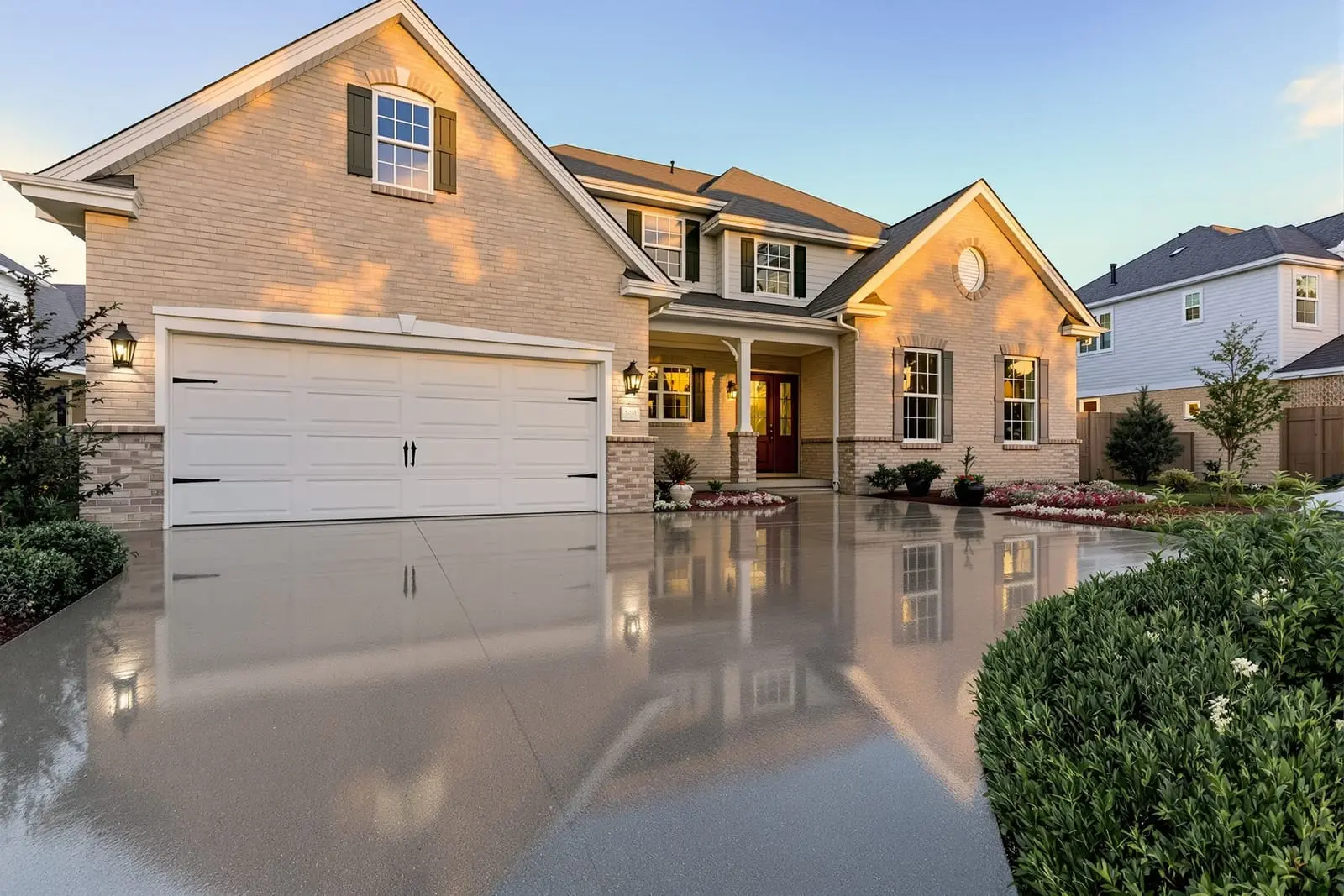
Our concrete driveway installation services in Madison, WI combine dependable workmanship with durable materials designed for local weather. We handle new concrete driveways and driveway paving installation from grading to final finish. Get a smooth, long lasting surface that boosts curb appeal and stands up to daily traffic.
Primetime Concrete Madison provides professional concrete driveway installation throughout Madison, WI and the surrounding area. Our licensed, insured crew delivers safe, clean, on-time work with a free estimate before anything begins. Call (608) 292-5067 or request your free quote.
Concrete driveway installation in Madison that is built for real Wisconsin weather
If you live in or around Madison, you already know that our winters are tough on concrete. At Primetime Concrete Madison, we build concrete driveways specifically for our freeze‑thaw cycles, road salt, and heavy plow trucks, not just for how they look on day one.
A proper concrete driveway installation in Madison starts with planning for frost. We look at your slope, soil type, how water currently drains, and where snow piles usually end up. If water is allowed to sit or flow toward your garage or foundation, you will see heaving, settlement, and cracking far sooner than you should. We design the driveway layout and pitch so water moves away from structures and towards the street or a swale, which is especially important when everything melts quickly in March.
We also talk through how you actually use your drive. Do you park a camper or work truck on it. Do you need a turn‑around area so you are not backing into traffic. Do you want a broom finish for traction in icy months or a decorative texture near the entry. These practical details guide thickness, reinforcement, and finish choices so you get a driveway that matches your daily life, not just a generic slab.
Our step‑by‑step driveway installation process
Primetime Concrete Madison follows a clear, field‑tested process so you know what will happen from the first day of work to the last.
1) Site evaluation and measurement
We visit your home, take accurate measurements, check setbacks, and identify utilities. In older Madison neighborhoods it is common to find shallow utilities or unknown drains. We call in Diggers Hotline and mark everything out before any excavation starts.
2) Removal and excavation
We remove the existing asphalt or concrete, haul it off site for proper disposal, then excavate to the depth needed for a solid base, usually 8 to 12 inches below final grade. In many Madison yards we run into clay pockets that hold water. When that happens, we dig a little deeper and replace the soft material so the base will not pump or shift in spring.
3) Base installation and compaction
We bring in a compactable gravel base (often 3/4 inch crushed stone with fines), spread it in layers, and compact each lift with plate tampers or rollers. This is where many driveways fail because the base is rushed or left uneven. We take time to achieve uniform compaction and the correct slope, usually at least 1 to 2 percent away from the house.
4) Forms, reinforcement, and layout
We set sturdy forms along the edges, then place reinforcement, typically steel rebar or welded wire mesh. For areas that will see heavy loads, like RV parking or work trucks, we may use a rebar grid with closer spacing and increase slab thickness to 6 inches or more. We also pre‑plan control joint locations so cracks follow straight, intentional lines instead of wandering across the slab.
5) Concrete placement and finishing
We order a mix that is appropriate for our climate, usually 4,000 psi or higher, with air entrainment to help it survive freeze‑thaw cycles. Concrete is placed, leveled, and bull‑floated, then we cut in edges and control joints. Finish options include standard broom for traction, light broom with a border, or decorative finishes in key areas.
6) Curing and clean‑up
After finishing, we apply a curing method that fits the weather that day, such as curing compound or coverings. Proper curing for at least 7 days is critical for strength and longevity. We return to saw cut joints if needed, remove forms, backfill edges, and clean up the site so you are not left with a mess of leftover gravel and debris.
Material, design, and finish options for your driveway
Concrete driveway installation is not one‑style‑fits‑all. Primetime Concrete Madison helps you choose materials and finishes that fit your budget and the character of your neighborhood, whether you are on the east side, west side, or out in the surrounding towns.
Thickness and strength: For most standard residential driveways in Madison, a 5‑inch slab with 4,000 psi air‑entrained concrete is our baseline recommendation. If you store heavier vehicles or trailers, we recommend at least 6 inches with upgraded reinforcement. Spending a little more here is usually cheaper than repairing a failed driveway later.
Reinforcement: Wire mesh is common, but we often suggest rebar in strategic locations like where the driveway meets the garage floor or sidewalk, and where vehicles turn in the same track every day. We also consider fiber‑reinforced concrete mixes for added crack resistance.
Finishes: A broom finish is the most practical for our icy winters because it provides texture for grip. We can use different broom angles or add a smooth border near the street or garage for a cleaner look. If you want something more decorative without going overboard, we can introduce a simple exposed aggregate strip, colored concrete accents, or stamped bands near the entry while keeping the main field a practical broom finish.
Edges and transitions: We pay close attention to the joint where your driveway meets the city sidewalk or curb apron. Some Madison homes have steep transitions that like to crack or chip. We often thicken the edge, add rebar dowels, and set joints to control movement at these points so plow blades and snowblowers do not break the concrete over time.
Drainage and add‑ons: If your current driveway sends meltwater into the garage or toward a low spot, we might recommend a slight regrade, an added drain channel near the garage, or a subtle change to the driveway layout. We can also include parking pads, walkways to side doors, and small patio areas as part of the same pour to control costs and give everything a consistent look.
What affects concrete driveway cost in Madison
No two driveways are priced exactly the same, even if they look similar at first glance. When Primetime Concrete Madison estimates a concrete driveway installation, we walk you through the specific cost drivers so there are no surprises.
Size and thickness: Square footage is the obvious factor, but thickness and reinforcement make a big difference. A 4‑inch slab with basic mesh costs less than a 6‑inch slab with a rebar grid and fiber mix. If you expect heavy loads, skimping on thickness to cut upfront cost usually means paying more in repairs later.
Access and removal: If we can easily reach your driveway with equipment and trucks, costs stay lower. In tight downtown Madison lots or steep driveways, we may need smaller equipment or more hand labor. Removal of old asphalt, concrete, or hidden buried debris can also impact cost, which is why we inspect closely beforehand.
Soil and base work: Soft or wet subgrade is common near low areas and older drainage lines. If we discover unsuitable soil, we will explain what needs to be removed and how much stone base is required to fix it. This adds some cost but is one of the most important investments in the life of the driveway.
Finish level and extras: A straightforward broom finish with standard gray concrete is the most budget‑friendly. Decorative borders, exposed aggregate, integral color, and additional walkways or parking pads will increase the price, although combining them into a single project is usually cheaper than doing them later.
Season and scheduling: In Madison, the best window for driveway work is typically late April through October, depending on weather. Spring and early summer dates can fill up quickly. Fall pours can be excellent too if we manage curing temperatures carefully. We do work outside that window when conditions allow, but we have to factor in cold‑weather protection and additives, which can slightly raise the cost.
Timing, curing, and long‑term care for your new driveway
A concrete driveway installation does not end when the crew leaves. The first few weeks after the pour are extremely important for the long‑term performance of your driveway.
Curing and when you can use it: In typical Madison summer weather, you can usually walk on the new driveway after 24 to 48 hours. Light vehicles are generally allowed after about 7 days, and heavier vehicles after 10 to 14 days, depending on temperature and mix design. We provide specific guidance for your project and ask that you avoid parking in the same spot every day for the first month to reduce early stress.
Cold weather considerations: If we pour in cooler months, we may use insulated blankets, accelerators in the mix, or adjusted schedules so the concrete gains strength before it is exposed to a hard freeze. We will explain any extra steps needed to protect the driveway and how that affects when you can drive on it.
Sealing: For Madison winters with salt and de‑icers, we recommend sealing the driveway after it has fully cured, typically within the first year. A quality penetrating sealer helps reduce surface scaling and makes it easier to remove salt and slush. We can schedule sealing or advise you on timing and products if you prefer to handle it yourself.
Daily maintenance: Avoid using ammonium nitrate or ammonium sulfate de‑icers, which attack concrete. Sand for traction is safer. Promptly moving heavy snow piles off the same small area every winter can also help reduce stress in those spots. If you notice small cracks, which are common even in well‑built driveways, we can discuss whether they are normal or if a simple joint or crack sealant would be beneficial.
Working with Primetime Concrete Madison: From the first site visit through curing and maintenance tips, our goal is to give you a driveway that handles real Madison conditions and stays strong for many years. We encourage questions at every step so you understand what we are doing and why, and we back our work with guidance you can use long after the trucks pull away.
“
Professional concrete driveway installation, done right the first time, quality materials, honest pricing, and results that last.
Primetime Concrete Madison
Concrete Driveway Installation Across Our Service Area