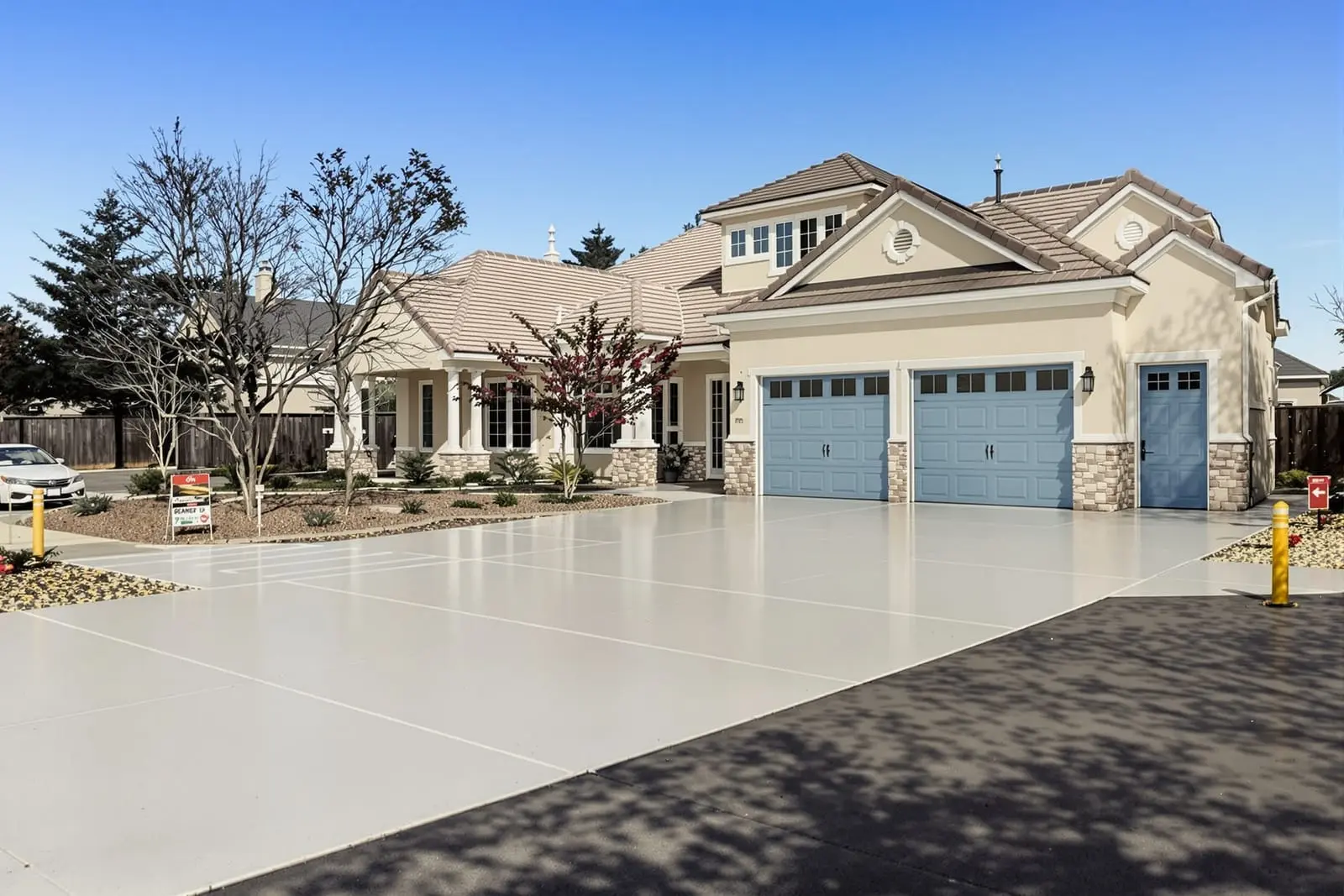
We provide commercial concrete paving in Madison, WI for access drives, parking areas, loading zones, and pedestrian routes. Our team manages grading, base preparation, reinforcement, and high strength concrete placement to handle traffic and heavy loads. We coordinate work to minimize disruption to your operations. Get long lasting flatwork tailored to your commercial site needs.
Primetime Concrete Madison provides professional commercial concrete paving throughout Madison, WI and the surrounding area. Our licensed, insured crew delivers safe, clean, on-time work with a free estimate before anything begins. Call (608) 292-5067 or request your free quote.
Commercial Concrete Paving for Madison Businesses
When you run a property in Madison, your pavement gets put to the test. Freeze-thaw cycles, road salt, delivery trucks, and foot traffic all add up. Primetime Concrete Madison focuses on commercial concrete paving that is designed specifically for our local conditions, not a one-size-fits-all solution.
Commercial concrete paving covers drive lanes, parking lots, loading areas, dumpster pads, walkways, aprons at overhead doors, and even reinforced slabs for heavy equipment. The right design for a Monroe Street retail lot is not the same as what a distribution warehouse near the Beltline needs. We start every project by asking how the space will be used, what kind of vehicles will be on it, and how often it will be plowed in winter.
When you call Primetime Concrete Madison, we typically meet you on site to walk the property. We look at drainage, existing pavement condition, grades, and how water currently moves during a hard rain. We also look for overhead and underground utilities, loading dock elevations, and entry door thresholds. That field visit in Madison’s real conditions often changes the design, for example, we might adjust slope around entrances so meltwater does not refreeze across a main walkway in February.
From there, we put together a concrete paving plan that balances longevity and budget. Sometimes this means a full-depth concrete lot. Other times, we might recommend thicker concrete only in heavy-use areas like dumpster pads and delivery lanes, with standard pavement where traffic is lighter. The result is a surface that holds up to Wisconsin winters while staying realistic on cost.
How Our Commercial Concrete Paving Process Works
A successful commercial concrete paving job is mostly decided before the first concrete truck arrives. Primetime Concrete Madison follows a step-by-step process that keeps surprises to a minimum.
1. Site evaluation and layout: We confirm property lines, required setbacks, ADA routes, fire lanes, and truck turning radii. For Madison projects, we also consider city requirements for accessible parking, curb ramps, and stormwater management. Catch basin locations, terrace trees, and neighboring drive approaches all matter for how we lay out the new concrete.
2. Removal and subgrade preparation: For replacements, we sawcut and remove the existing pavement and soft subbase. Then we proof-roll the subgrade with a loaded truck or roller to find soft spots. In many parts of Madison, especially near the lakes, we run into silty or organic soils that cannot support heavy loads. Those areas get undercut and replaced with compacted base course stone until we reach a stable platform.
3. Base installation: We typically install 4 to 8 inches of compacted crushed stone base for commercial work, sometimes more under heavy truck lanes. We compact in lifts and check with a plate compactor or roller to reach proper density. A well-built base is your insurance policy against future settling and cracking.
4. Forming and reinforcement: We set forms to the final elevations, then check slopes with laser levels so water drains to inlets or edges instead of pooling near doors. For commercial concrete paving, we usually place welded wire mesh or rebar in areas that see frequent truck traffic, dumpster loads, or pallet jacks near dock doors. In spots that handle extremely heavy loads, such as trash enclosures, we may specify thicker sections with added rebar patterns.
5. Concrete placement and finishing: We use a commercial mix with air entrainment for freeze-thaw resistance, typically 4,000 psi or higher for drive lanes and loading areas. We pour in sections, place the concrete, and use screeds to reach proper thickness and slope. For surface finish, we usually recommend a broom finish that provides traction during Madison’s icy months, with a tighter trowel finish reserved only for interior transitions or special cases.
6. Joints and curing: We cut control joints at specific intervals based on slab thickness and layout. Proper joint spacing is critical, since concrete will crack and joints tell it where to do it. We then apply a curing compound or use wet curing methods so the pavement gains strength evenly and resists surface scaling from salt and weather.
7. Final cleanup and striping: Once concrete has sufficient strength, we pull forms, backfill edges, and arrange pavement striping and signage if needed. That can include ADA symbols, directional arrows, stop bars, and custom stall layouts tailored to your operation.
Design Options, Thickness Choices, and Why They Matter
Commercial concrete paving is not just about pouring a big gray slab. Design choices affect performance, maintenance, and how your property looks and functions.
Concrete thickness is the first major decision. For light duty parking with mostly passenger cars, 5 inches of concrete may be adequate. For areas with frequent delivery trucks, garbage trucks, or semi traffic, we often recommend 6 to 8 inches or more. In Madison, where plow trucks and garbage trucks can be heavy and visit year round, underbuilding thickness is a fast way to end up with cracked and rutted pavement.
Reinforcement is another key factor. While residential driveways sometimes skip steel, Primetime Concrete Madison typically includes welded wire mesh or rebar in commercial traffic lanes, dumpster pads, loading zones, and anywhere forklifts operate. Reinforcement does not stop concrete from cracking, but it controls how cracks open and helps keep the slab acting as one surface.
Finishes and surface treatments matter both for safety and for appearance. Most commercial exterior surfaces get a broom finish that produces light texture. In Madison winters, that texture helps reduce slip hazards when a thin layer of ice or packed snow forms. If you have outdoor steps, ramps, or employee entrances, we can increase texture in those high-risk areas while keeping a slightly smoother finish near storefronts for easier cleaning.
There are also color and joint layout options. Integral color or subtle tinting can distinguish pedestrian walkways from vehicle lanes or highlight a plaza area without needing separate materials. Joint patterns can be aligned with building features, light poles, or landscape islands so that the pavement looks organized instead of randomly sliced. On retail and office projects in places like East Washington Avenue or the near West Side, a thoughtful joint pattern makes a significant difference in curb appeal.
Edge conditions are often overlooked but become important in practice. We can thicken edges near utility covers and manholes, install concrete curb and gutter that integrates with the slab, or transition cleanly to existing asphalt, gravel, or interior slabs. Proper detailing around doors and dock seals helps avoid frost heaving the slab above the sill, which is a common issue in Wisconsin when pavements are not isolated or sloped correctly.
Costs, Timelines, and What Affects Your Budget
Every project is different, but there are consistent drivers that determine the cost of commercial concrete paving in Madison. Understanding these drivers up front helps you plan and compare bids intelligently.
Square footage and thickness are the biggest cost factors. Doubling the area nearly doubles material and labor, and every extra inch of concrete across thousands of square feet adds up. Heavier-duty sections for dumpsters or truck routes cost more per square foot than standard parking stalls, which is why Primetime Concrete Madison often designs separate pavement zones matched to actual loads instead of overbuilding everything.
Existing conditions have a big impact too. If your current pavement is thin asphalt over poor soil, we may need more excavation and base replacement. If the site has tight access or is surrounded by active businesses, scheduling and staging become more complex. Working downtown or near the Capitol often requires more traffic control and coordination with neighboring properties, which affects labor time.
Subgrade corrections are another budget wildcard. On some Madison sites, particularly closer to the Yahara River or low-lying areas, we discover soft or saturated soils only after removal. We address this by undercutting unsuitable soils and replacing them with compacted base. It adds cost, but skipping that step usually leads to settlement and cracked slabs within a few winters.
Timeline is mostly driven by project size, weather, and how much phasing is needed to keep your operation running. A small loading dock apron might be turned around in several days from demo to reopen. A large commercial lot might require phased work, where we keep a portion open for customers or deliveries while we reconstruct another section. In Madison, we also work around concrete curing temperatures in spring and fall, sometimes adjusting pour times or using cold weather practices so strength gain stays on track.
We are transparent about these tradeoffs. When Primetime Concrete Madison provides a proposal, we outline the concrete thickness, base depth, reinforcement, and any allowances for unforeseen subgrade work. That way, if you are comparing multiple bids, you can see whether everyone is actually proposing the same thing or if a low number is based on thinner pavement or minimal base prep that will not hold up.
Common Problems We Solve and How to Plan Your Project
Most commercial concrete paving issues we see in Madison share a few common themes, and nearly all of them trace back to design or preparation instead of the concrete itself. Knowing what to look out for can help you avoid repeating older problems when you replace or expand your pavement.
Poor drainage is at the top of the list. Water that pools on the surface, collects along building walls, or drains toward loading docks will find its way into joints and freeze. Over time, that leads to spalling, joint damage, and potential leaks into lower levels. Primetime Concrete Madison checks existing and proposed slopes, adjusts elevations at catch basins, and may recommend extra inlets or different grades so water has a clear path off the pavement.
Another frequent problem is cracked or settled sections at dumpster pads and loading areas. These spots see the highest loads, especially from trucks turning while stationary. Thin slabs, inadequate base, or missing reinforcement here fail quickly. We often rebuild these critical areas with thicker, heavily reinforced concrete and base course, even when the surrounding lot can remain standard thickness.
In winter, salt and snow removal practices matter. We use air entrained mixes that handle freeze-thaw cycles better, and we recommend that new commercial concrete paving not be heavily salted in the first winter if it can be avoided. We explain appropriate deicing products and plow blade practices to your maintenance team so the investment holds up longer.
To plan your project, start by identifying your must-stay-open access points and busiest times. For retail, this might mean scheduling major pours early in the week so weekend traffic is not disturbed. For industrial properties, we might time work around shipment schedules or plant shutdowns. Together, we map out phases that keep core operations functioning while still moving the project forward efficiently.
Permits and inspections are often part of commercial work within Madison city limits. Primetime Concrete Madison can coordinate with the city for approvals related to approaches, sidewalks in the right of way, and ADA compliance where required. We also help you think through future expansions, conduit runs under the pavement for future lighting or EV chargers, and any planned changes in traffic patterns so you do not have to cut freshly poured concrete a year later.
“
Professional commercial concrete paving, done right the first time, quality materials, honest pricing, and results that last.
Primetime Concrete Madison
Commercial Concrete Paving Across Our Service Area