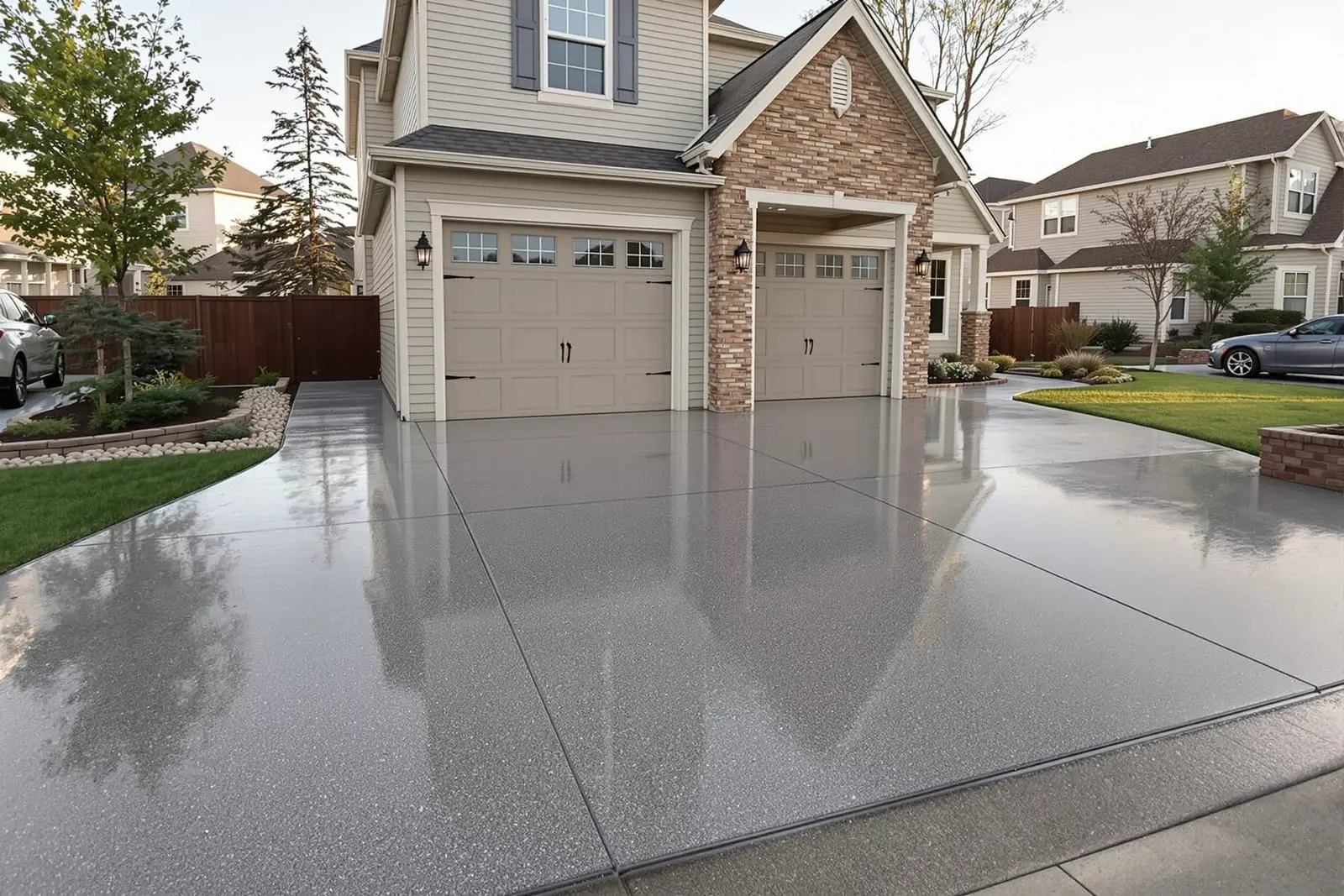
We install concrete garage floors in Madison, WI that are built to handle vehicles, storage, and daily wear. Our services include new concrete basement floors and garage slab installation with proper reinforcement and finishing. Replace cracked or uneven floors with smooth, durable concrete that is ready for coatings or storage systems.
Primetime Concrete Madison provides professional concrete garage floor throughout Madison, WI and the surrounding area. Our licensed, insured crew delivers safe, clean, on-time work with a free estimate before anything begins. Call (608) 292-5067 or request your free quote.
Concrete Garage Floors Built for Madison Winters
A concrete garage floor in Madison has to do more than just look smooth. It needs to handle road salt, snowmelt, freeze-thaw cycles, and heavy vehicles without heaving or spalling. At Primetime Concrete Madison, we design garage and basement slabs specifically for Dane County conditions, not a generic national standard.
Our typical garage floor mix uses a 4,000 to 4,500 PSI air-entrained concrete with the right air content to survive repeated freezing and thawing. We pay attention to water-cement ratio so the slab cures strong instead of chalky. For garages that see frequent de-icing chemicals, we usually recommend a mix and finish that can take a sealer or coating later, so you are not locked out of future upgrades.
Basements in Madison often sit over clay soils that expand and contract with moisture. That movement can crack a poorly planned slab. Primetime Concrete Madison lays out control joints, reinforcement, and sub-base preparation around how your specific house is built, where plumbing runs, and how groundwater behaves in your neighborhood. The result is a floor that is more stable, drains correctly where needed, and is ready for storage, living space, or future finishes.
How We Install Garage & Basement Concrete Floors Step by Step
For both garages and basements, the quality of the work you cannot see under the slab determines how it holds up. Primetime Concrete Madison follows a detailed sequence that we explain on site before we start.
First, we evaluate the existing base. In an older Madison garage, that may mean cutting and removing an old slab, hauling it off, and checking for soft spots, organic material, or poorly compacted fill. We install and compact a granular base, typically 4 to 6 inches of crushed stone, thicker in areas with known soft soils or water issues.
Next, we set elevations using laser levels so the finished floor has the correct slope. In garages, the slab typically pitches toward the overhead door or a trench drain, depending on your preference and how snowmelt tends to collect. In basements, we set slope around floor drains and sump crock locations, making sure any future finish flooring is still practical.
We then place reinforcement that fits your situation. For most projects, that means welded wire mesh or rebar grids supported on chairs, not thrown in after the pour where it ends up at the bottom. In some basements we recommend fiber-reinforced concrete to reduce surface cracking, especially where you plan to leave the slab exposed.
On pour day, we schedule concrete deliveries around the weather and temperature. In spring and fall in Madison, we often use accelerators or set blankets to hit proper cure strength even with cool nights. We place the concrete, screed it to our elevation pins, bull float, and then finish according to use: light broom for garage traction, smooth trowel where a future epoxy or floor covering is planned, or a lightly textured finish that splits the difference.
Finally, we saw cut control joints at the right spacing and depth once the slab reaches proper hardness. This is what helps manage shrinkage cracks and keep them straight and less noticeable. We clean up, handle debris removal, and leave you with clear instructions for curing and first use.
Options for Your Concrete Garage Floor and Basement Slab
Every concrete garage floor or basement floor can be tailored to how you actually use your space. Primetime Concrete Madison walks you through options that affect durability, looks, and cost before we quote anything.
For garages, we can include thicker slab sections where heavy loads sit, such as under a 2-post lift, large workbench, or compressor. If you plan to install a vehicle lift, we can thicken the slab to 6 to 8 inches with additional rebar in those zones and document it for the lift installer. We also discuss where control joints will fall so they do not end up right under the lift posts or in the path of a future garage drain.
Finishing options range from a standard broom finish, which provides traction in winter, to a tighter trowel finish that works better under epoxy or polyaspartic floor coatings. We can also add integral color or do a basic densifier and sealer if you want an easy-to-clean gray floor without a separate coating system.
For basements, popular options include a smooth power-trowel finish ready for carpet, vinyl plank, or laminate, or a polished-ready surface for those who want stained or sealed concrete as a finished floor. In utility areas, we often recommend a slightly textured finish that balances cleanability with safety when the floor is damp.
We also plan around future framing and walls. That may mean recessing the slab in certain areas to accommodate showers or floor transitions, or lifting the finish elevation slightly to help you avoid complicated subfloor systems down the road.
What Drives Cost For Garage & Basement Concrete Floors
Customers in Madison often ask why quotes for a concrete garage floor can vary so much. Primetime Concrete Madison breaks your price down so you understand what you are paying for and where you can make informed decisions.
The biggest factors are slab size and thickness, the condition of the existing base, and access for equipment and trucks. Removing an existing cracked slab, hauling debris, and rebuilding a proper stone base can be a meaningful part of the cost, especially in tight city lots or older neighborhoods where we cannot easily get a skid steer into the backyard.
Soil and water conditions matter. In areas with poor drainage or known groundwater issues, we may recommend a thicker base, drain tile, vapor barrier, or additional sump capacity for basements. These add cost up front but can prevent slab heaving, moisture damage to future finishes, and mold concerns.
Structural needs and reinforcement options also affect pricing. A basic residential garage that holds two vehicles has different requirements than a garage with a skid steer, boat, or lift. Rebar grids, thicker edge beams at garage doors, or thickened pads under posts all add material and labor but significantly improve performance.
Finally, timing and season play a role. Pouring in the heat of July or in late fall near freezing conditions means different admixtures, protection, and scheduling. We are upfront if certain dates will require extra measures for curing and explain the cost-impact so you can choose whether to proceed or wait for a better window.
Common Problems With Concrete Floors And How We Prevent Them
Most of the issues people see with garage and basement floors in Madison show up years later, not on day one. Primetime Concrete Madison designs and installs floors with those long-term problems in mind so you are not calling someone else for repairs in a few winters.
Surface scaling and flaking from road salt is common on garage slabs that were not air-entrained correctly or were finished too early with bleed water on the surface. We time finishing so the bleed water is gone, avoid adding water on the surface, and specify a mix suitable for de-icing exposure. We also strongly recommend sealing garage slabs once they have fully cured and give you timing and product suggestions.
Random cracking often happens when control joints are spaced too far apart, cut too shallow, or sawed too late. We plan joint layout based on slab dimensions and obstacles so the slab can move predictably. For basements with long narrow rooms, we pay special attention to joint placement so future flooring installers are not dealing with cracks in the wrong locations.
Moisture through basement slabs can ruin flooring and cause musty odors. We address this with a proper stone base, vapor barrier under the slab, and drainage that fits your property. In older Madison homes, we frequently see basements without vapor barriers under old slabs. When replacing those, we make sure the new floor is upgraded so you can safely add carpet, vinyl, or wood-look flooring.
Poor slopes and standing water in garages or around basement floor drains is another big complaint. We use laser levels to set pitch before we pour and re-check as we screed and finish. If you have had puddles for years, we can usually correct that in the new slab with better design, not just better finishing.
What To Expect Working With Primetime Concrete Madison
When you hire Primetime Concrete Madison for a concrete garage floor or basement floor, the first step is an on-site visit. We measure, look at your current slab and structure, check access, and talk through how you actually use the space. We do not quote from a satellite image for this kind of work because local conditions matter too much.
You receive a written proposal that outlines slab thickness, reinforcement type, joint layout, and any drainage or vapor barrier work we recommend. If you are comparing other bids, we encourage you to line those details up side by side so you are not comparing a basic slab to a more robust system without realizing it.
Scheduling is coordinated around the weather as well as your timeline. In Madison, we avoid pouring in the coldest stretches of winter unless absolutely necessary because the protection required adds cost and risk. Spring through fall is usually ideal, and for basements we can often work earlier in the season since the space is protected from wind and direct sun.
During the project, you will see the same small, experienced crew from prep through finishing. We keep you updated on start times, pour timing, and when you can walk or drive on the new slab. Typically, light foot traffic is allowed after 24 hours, heavier items after several days, and vehicles after about a week, depending on weather and mix.
We leave you with clear maintenance advice: when to apply sealer, what not to use on the slab in the first winter, and how to spot early issues before they become bigger problems. The goal is simple, a garage or basement floor that works for how you live, holds up to Madison weather, and does not need to be torn out again in a decade.
“
Professional garage & basement concrete floors, done right the first time, quality materials, honest pricing, and results that last.
Primetime Concrete Madison
Garage & Basement Concrete Floors Across Our Service Area